
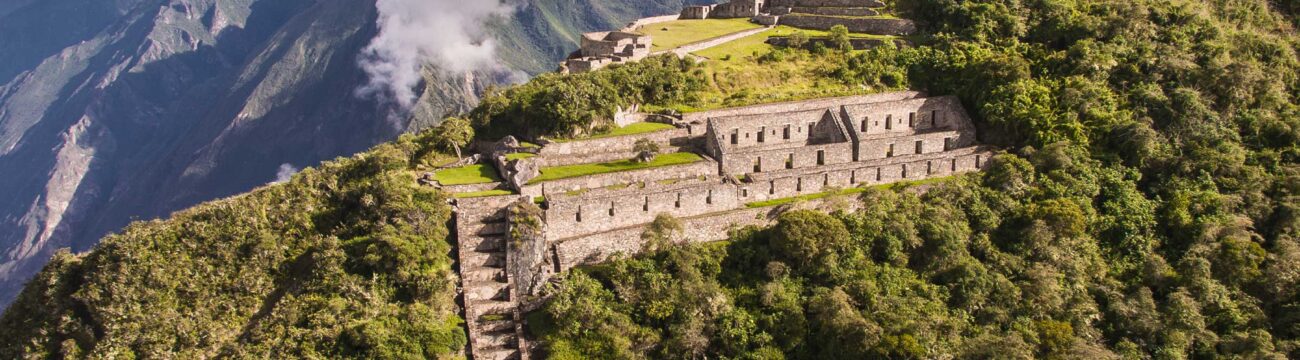
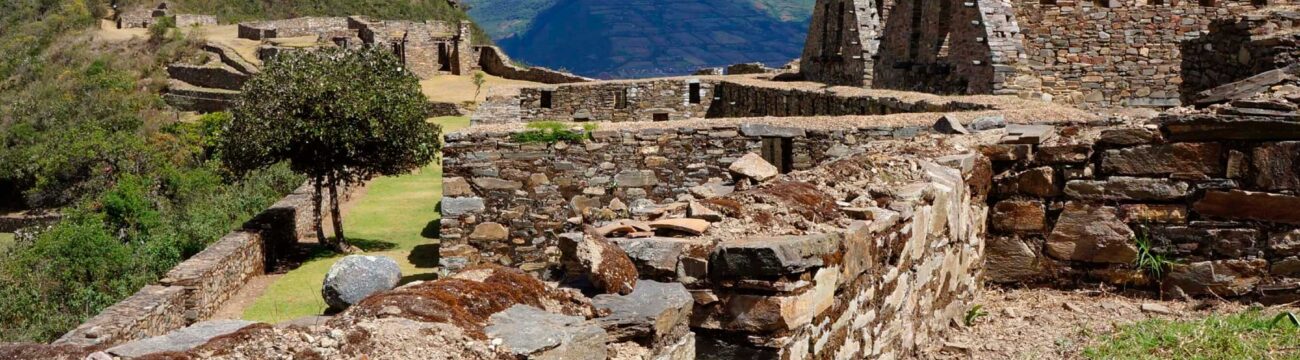


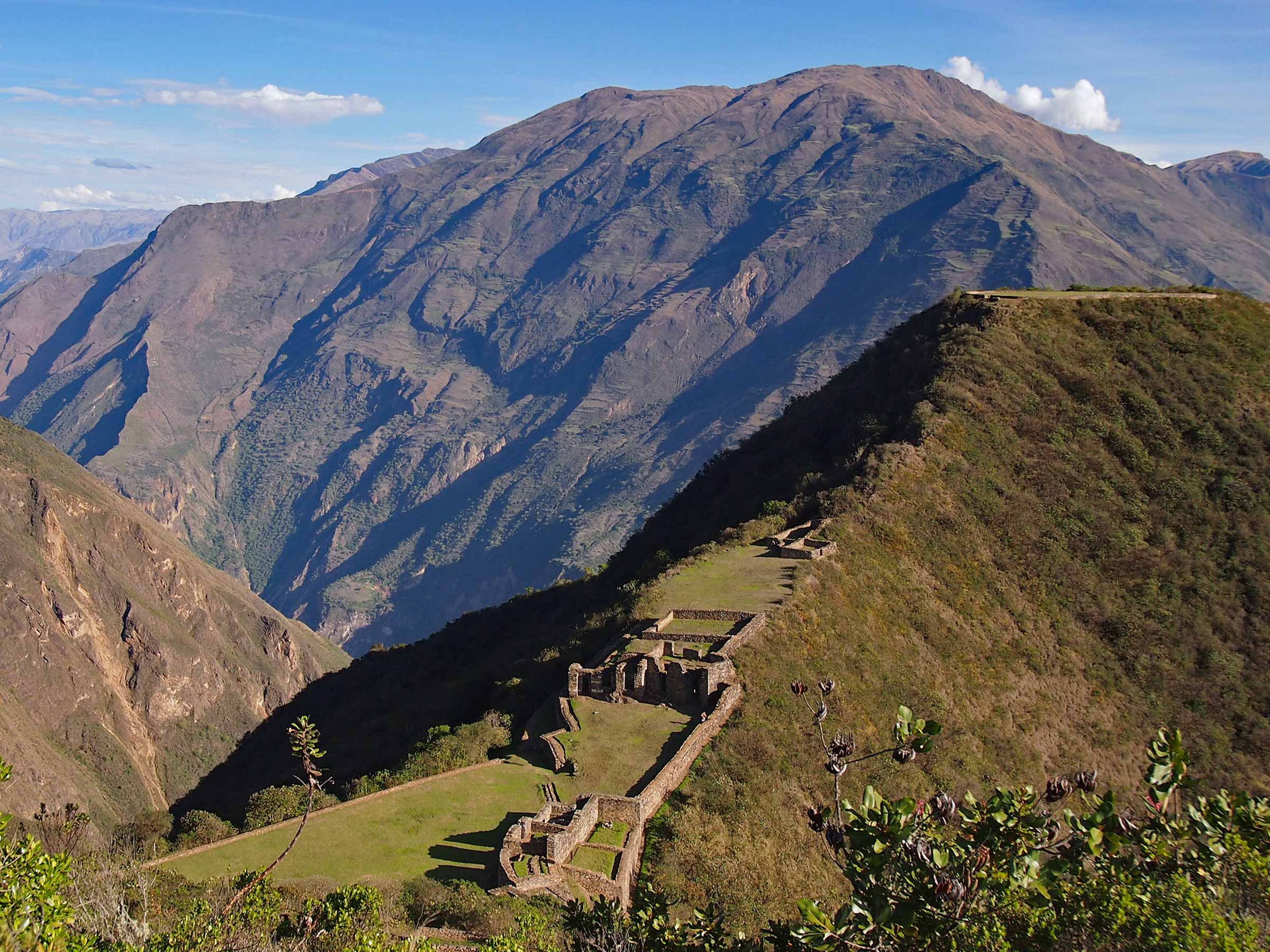
Choquequirao lies at an altitude of over 3,080 m (10.000ft) on top of a plateau above the Apurimac River which looks out at Mount Salcantay. Just getting to this archaeological complex is an adventure itself which demands physical fitness and the right gear. The diversity of climates throughout the hike and the jagged terrain along the way make it a bruising, although rewarding experience. Surrounded by a fascinating landscape created by the Vilcabamba mountain range it has everything to offer a trekker.
As Choquequirao gets only a few visitors, travelers can experience the feeling of visiting a remote and enigmatic spot where time seems to have stopped.
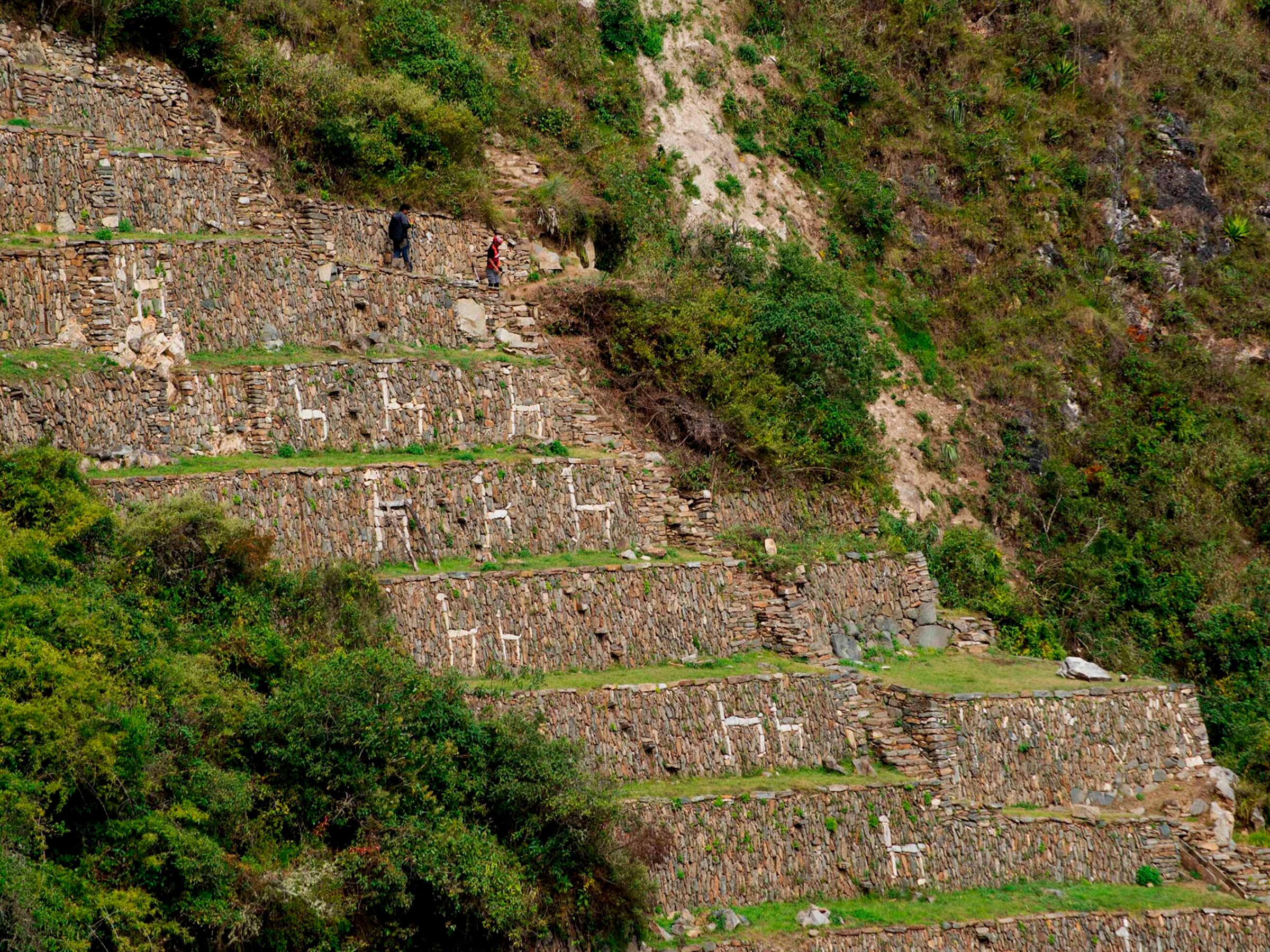
This ‘Lost City’ Choquequirao (“Golden Cradle”) was discovered in the 18th century by a French explorer; it fascinated 19th century explorers and was also visited by Hiram Bingham prior to his discovery of Machu Picchu. Grandios and mysterious, this abandoned city has lots of parallels with Machu Picchu and there are a variety of theories about its function. It is only relatively recently, however, that COPESCO (the official body responsible for tourism in Peru) has only partially cleared the site as there are a lot more remains to be discovered. It is a challenging but amazing experience to hike down to the depths of the Apurimac Canyon and then up to the site in the clouds.
Choquequirao “Cradle of Gold” in Quechua, “The Other Machu Picchu”, as a 2007 article in the New York Times called it, is an incredibly preserved Inca outpost, dramatically perched on a promontory nearly 1800 m / 6000 ft above the roaring Apurimac River gorge.
Between 5:30 am and 6:00 am we will pick you up from your hotel and leave Cusco in our private transportation, which will take us to the town of San Pedro de Cachora (2800masl), where we can do last minute shopping for the trek, then we will drive to the sector of Kapuliyoq (viewpoint), where we will start our hike. Here we meet the rest of our travel team (cooks, muleteers and their horses). On the way we can also observe a great diversity of landscapes that belong to different climates, such as the snow-capped mountains of Pedrayoc, the diversity of flora and fauna embellish our walk.
Today we will walk 4 to 6 hours where we can observe the deepest canyon in the world that is known, the Apurimac and where the majestic Apurimac River flows and it is also possible to observe the first views of Choquequirao. We will continue descending to Chikisqa, where we will have lunch and it will be in that place where we will have dinner and camp until the next day.
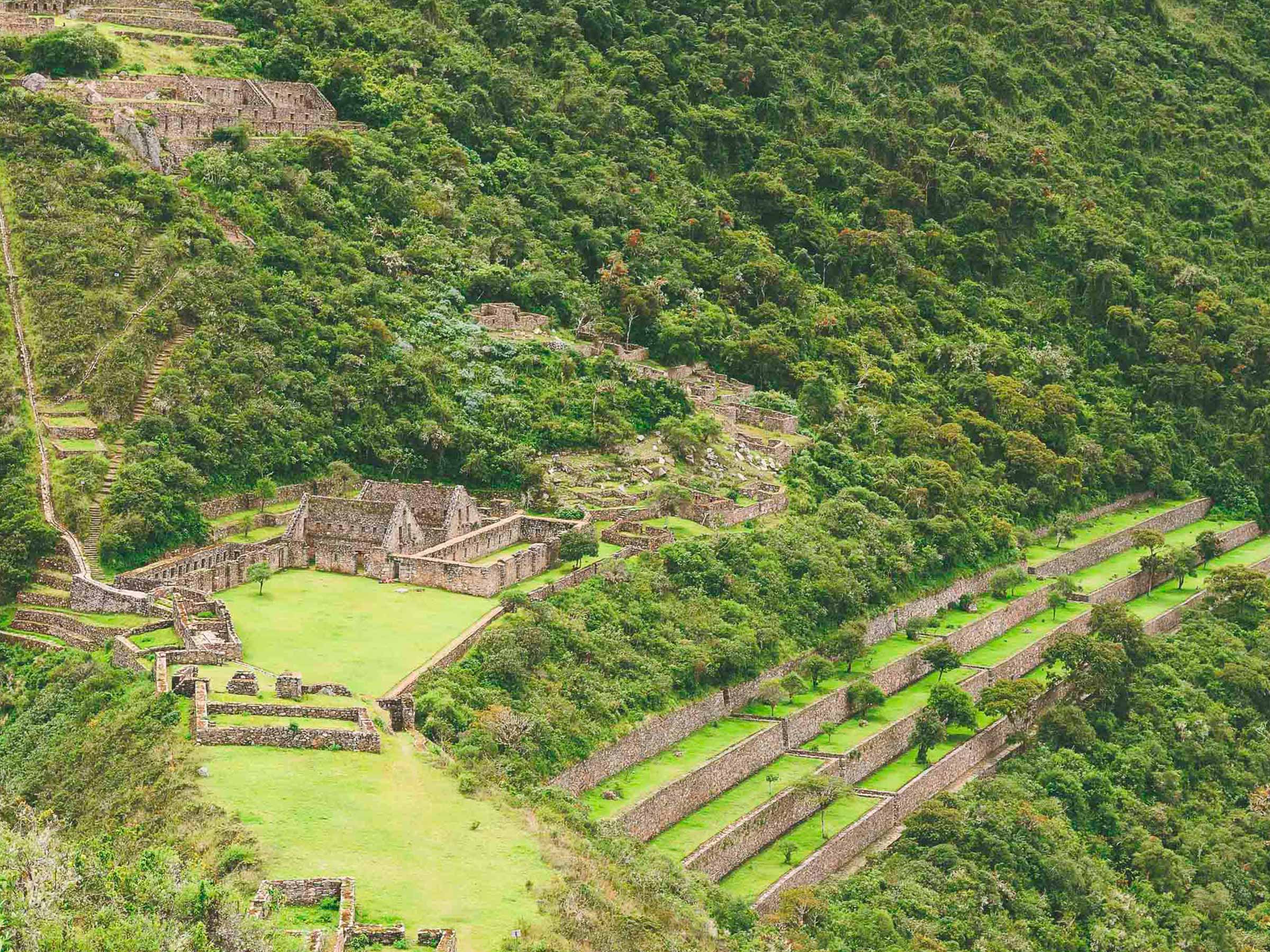
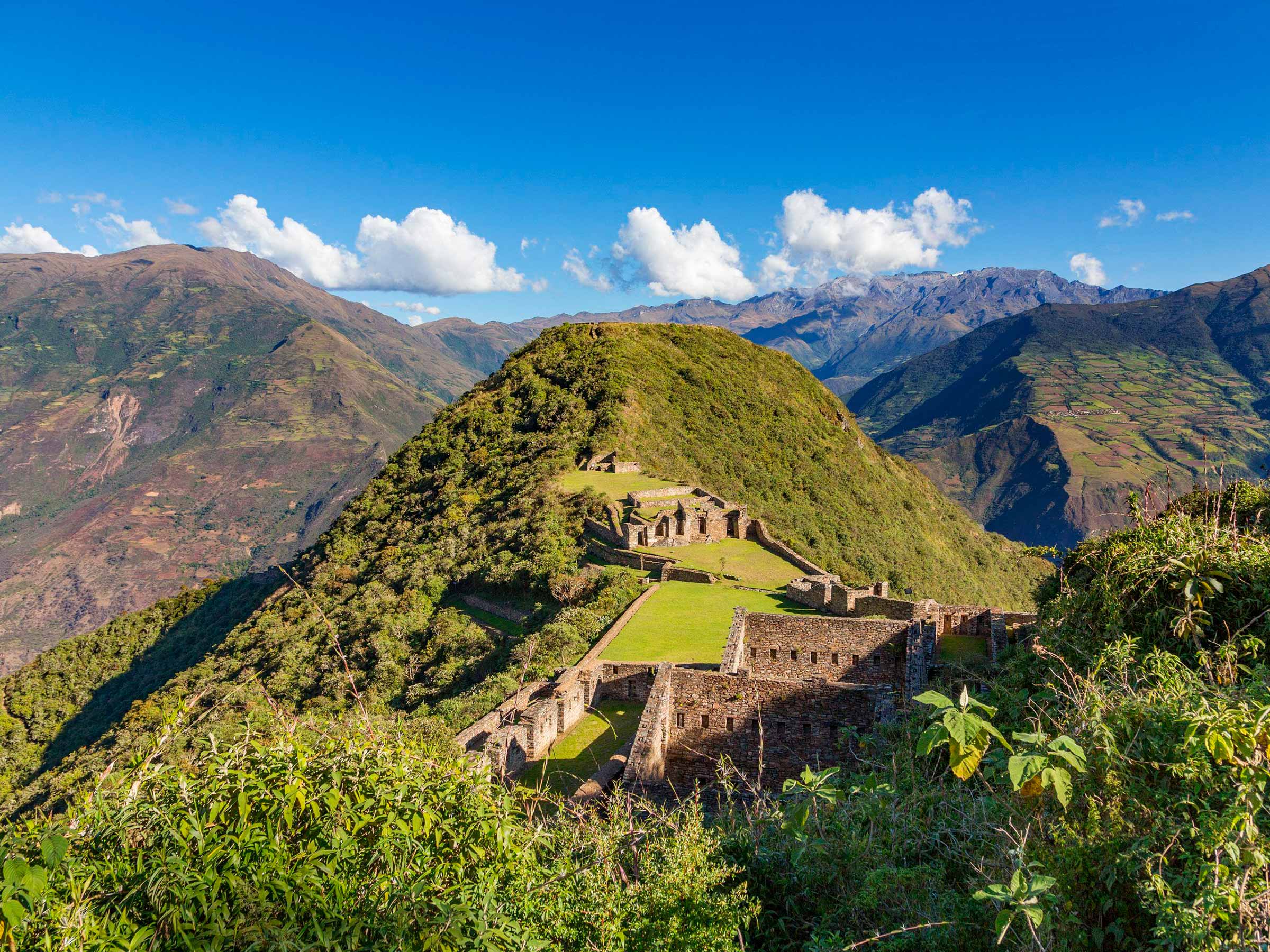
After a good breakfast at 6.00 am. we leave Chikisqa to go down to the beach of Rosalina, which will last about an hour. Then we cross the Apurimac River and begin to climb towards Santa Rosa, zigzagging down a steep slope. This climb will take approximately 2 hours, and it is important that we leave early so that the heat does not make it more difficult than it should be. In Santa Rosa, we take a half hour break, where those who wish can try Cambray, a local sugar cane extract.
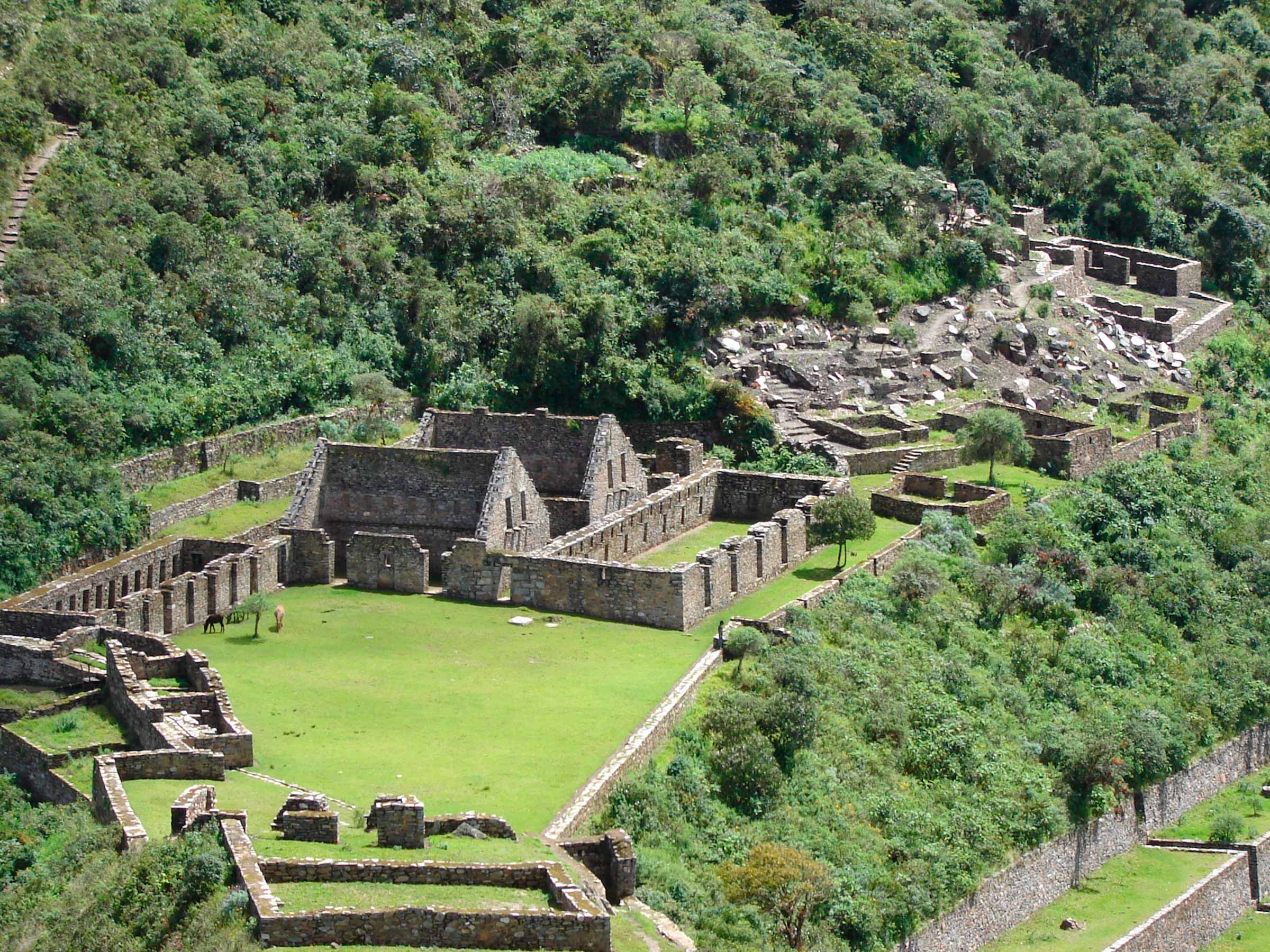
Then, we continue our hike slowly climbing for two and a half hours until we reach our lunch spot in Marampata. From here we will walk another two hours until we reach the archaeological complex of Choquequirao, located at 3103m / 10178 feet, and will have a guided tour by our guide. After some coordination we will decide where to camp (Choquequirao or Marampata campsite). We will have dinner and camp at our campsite.
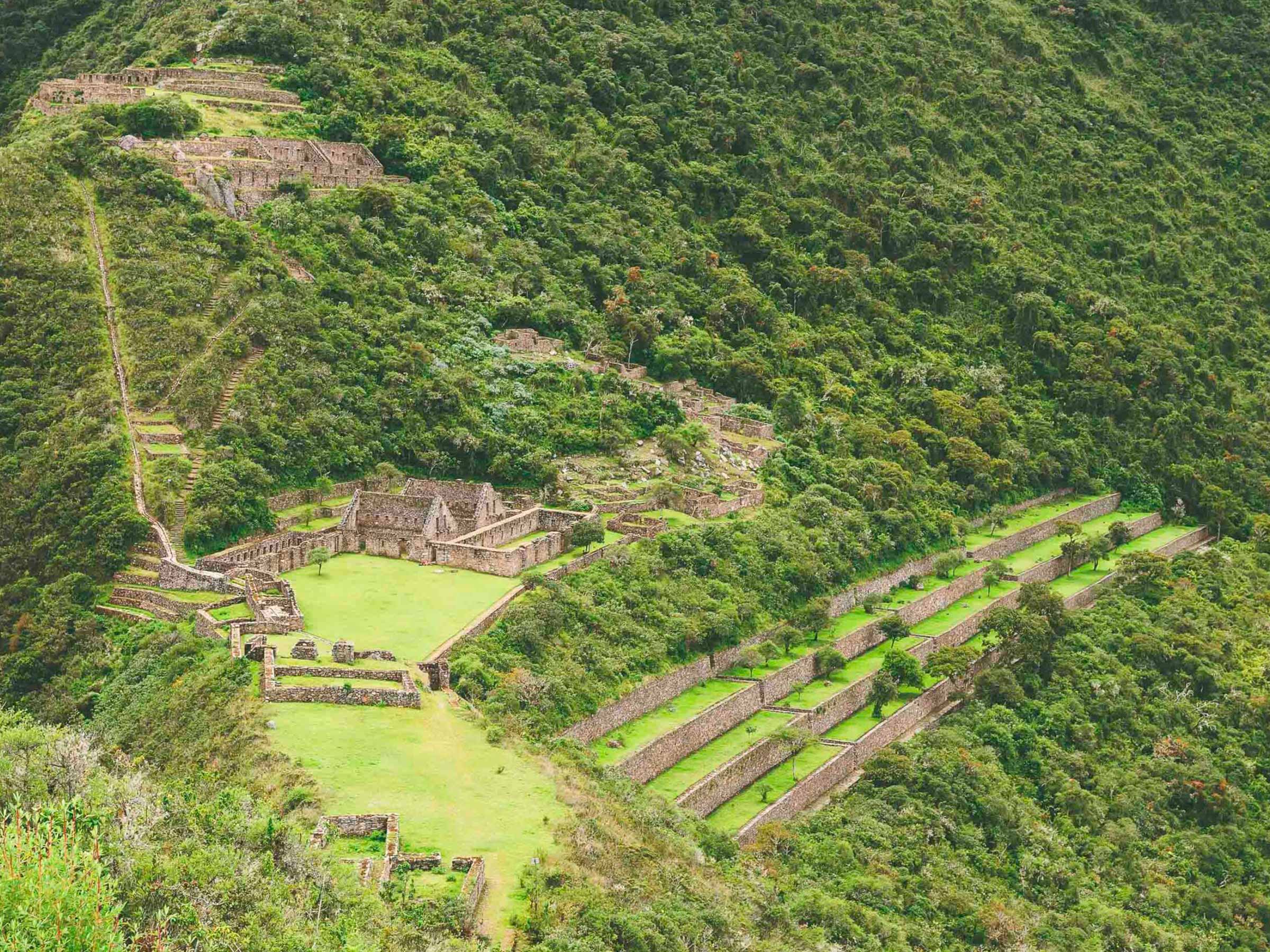
Today, a great breakfast will prepare us for another intense day, then we will start walking downhill for about 6 hours on a steep trail to return to the Chikisqa area, where we will take a well-deserved rest and a succulent lunch awaits us. On this section of the trail, we will enjoy spectacular views of the great Apurimac Canyon from different angles. Upon arrival at the Kapuliyoc viewpoint, we will settle in for the night and dinner.
In the early hours of the morning we will enjoy an Andean breakfast and a unique view of the panorama from the Kapuliyoc viewpoint. We will continue our trip to the archaeological site of Saywite for a visit and lunch in this place.
Then we will depart to Cconoc to relax in the hot springs, have dinner and spend the night in the camp.
The last Andean breakfast will be given in the early hours of the morning, and then we will head to the archaeological site of Tarahuasi, where you will have time to explore and take pictures. Finally we will board a 2 hour drive to Cusco. Upon arrival at around 12 p.m., you will be transferred to your hotel.
End of services.
Choquequirao is considered the last Inca refuge, it resisted for decades to the Spanish conquerors after 1536. It is located in the Vilcabamba Valley, it is located at the top of the Apurimac canyon which is the deepest in the world, at an altitude of 3,030 meters above sea level, between the Andean mountains and jungle. This archaeological park is considered as important as Machu Picchu, after days of hiking you reach the “Golden Cradle” of the Incas, stepping on these lands is very difficult but not impossible. If you visit Peru is a place you definitely can not miss.
The Choquequirao Archaeological Park is an Inca llaqta located in the Cusco region, in the south of Peru. To be more precise, it is located in the heart of the Andes and its magnificent constructions are sheltered by the incredible mountains of the Peruvian Andes.
Because of its structural and architectural similarity, it is known as the sacred sister of Machu Picchu. And, according to many studies, it is also considered the last refuge of the Incas of Vilcabamba. Today it is not only a favorite destination for adventure lovers, it is also preferred by those travelers who love nature and wildlife.
Today, Choquequirao is one of the most famous trekking routes preferred by thousands of travelers from all over the world. The trek to Choquequirao is very demanding and challenging, but at the same time so rewarding. Because when you arrive at the citadel you will realize that you are one of the lucky few who walk the corridors free from the large crowds and the bustle of the city.